If you are drawn to Rancho Santa Fe, you are probably looking for more than square footage. You are looking for a certain feeling: space, privacy, timeless design, and a home that fits the land instead of fighting it. Whether you love the romance of an older hacienda-style estate or the ease of a newer reimagined property, understanding the difference can help you focus your search. Let’s dive in.
Rancho Santa Fe’s estate identity
Rancho Santa Fe stands apart because it was planned to remain a low-density estate community. The Rancho Santa Fe Covenant was established in 1928 to help preserve the area’s rural landscape character and guide future architecture. In the broader San Dieguito plan area, the County of San Diego describes estate residential development as typically made up of two-acre or larger lots.
The Rancho Santa Fe Association says the Covenant covers about 6,720 acres and around 1,900 residential building sites, with very few unimproved sites left. The Village sits near the center of the Covenant and helps anchor that long-established community pattern. For buyers, that means the market is shaped less by brand-new neighborhood rollout and more by preservation, renovation, and thoughtful rebuilding.
What makes an estate feel historic
Historic Rancho Santa Fe is closely tied to the 1920s planned-community era. California State Parks describes it as one of California’s first planned communities unified by a single architectural theme: Spanish Colonial Revival. That design influence still defines much of the area’s visual identity today.
Lilian Rice played a central role in shaping that identity. The Rancho Santa Fe Association notes that her work remains visible in village buildings and private residences within the Covenant. Her approach emphasized homes that felt rooted in the land, not oversized statements competing with it.
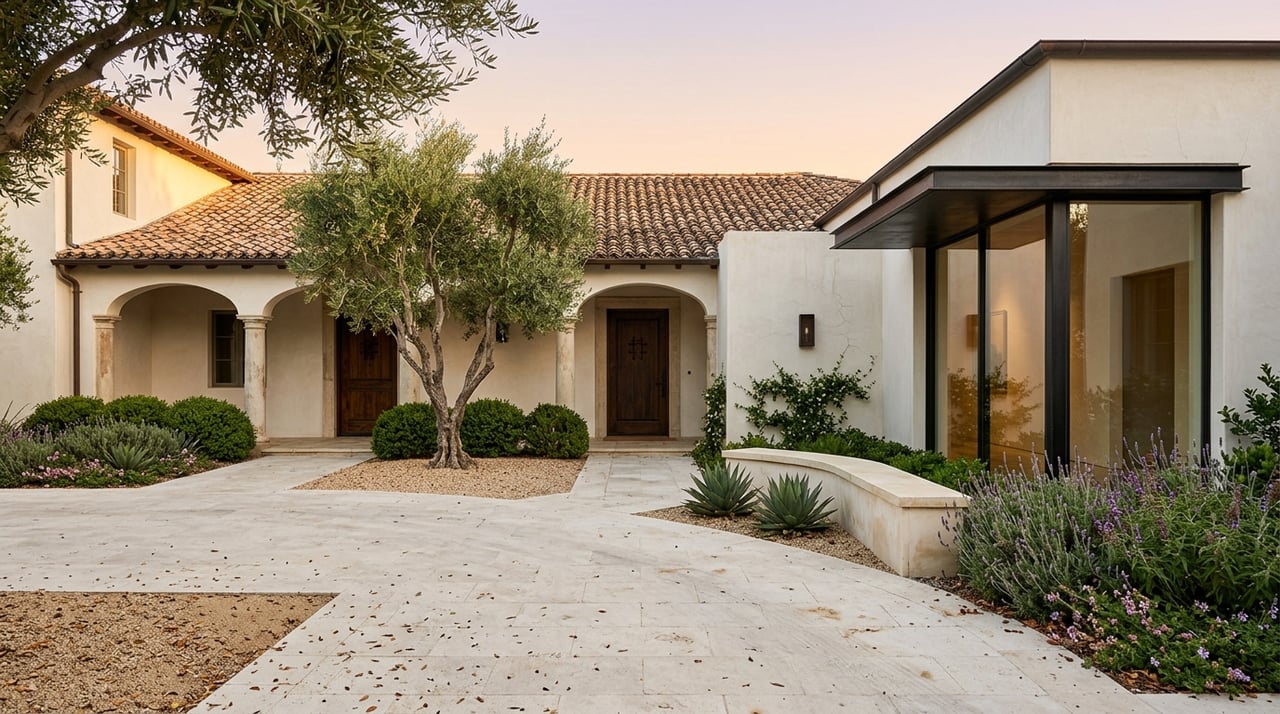
In practical terms, a historic estate in Rancho Santa Fe often reflects old California ranch and hacienda design. You may see adobe or stucco walls, clay tile roofs, arched openings, courtyards, covered porches, and mature landscaping that softens the home into its setting. The overall look is usually low-profile, horizontal, and restrained rather than ornate or dramatic.
There is also a deeper local history behind that style. The Osuna Ranch includes one of California’s oldest adobe homes, with parts dating to the 1830s, and it was remodeled by Lilian Rice in 1924. That layering of early California history and 20th-century planning is part of what gives older Rancho Santa Fe estates their distinct sense of place.
Why historic estates appeal to buyers
Historic estates often appeal to buyers who want character that cannot be easily replicated. Original architecture, traditional room sequencing, and long-established landscape settings can create a sense of permanence that feels rare in any market. For some buyers, that connection to the Covenant era is the main draw.
These homes can also offer a more intimate, textured experience. Instead of a fully open layout, you may find spaces that unfold gradually from room to room. That traditional flow can feel warm, private, and grounded in architectural heritage.
How newer estates fit Rancho Santa Fe
Newer estates in Rancho Santa Fe do not exist in a design free-for-all. The Rancho Santa Fe Association explains that the community’s architecture has evolved since 1928 within the planned-community concept, and its Art Jury reviews projects to help preserve community character and future architectural quality. In other words, newer homes are usually expected to respect the larger setting.
That matters because Rancho Santa Fe is not typically defined by extreme modernism. The Association’s residential guidance indicates that many styles can clash with the area’s traditional design philosophy, including extreme modern and certain overly formal or non-indigenous revival styles. So even newer estates often feel restrained, site-sensitive, and connected to the landscape.
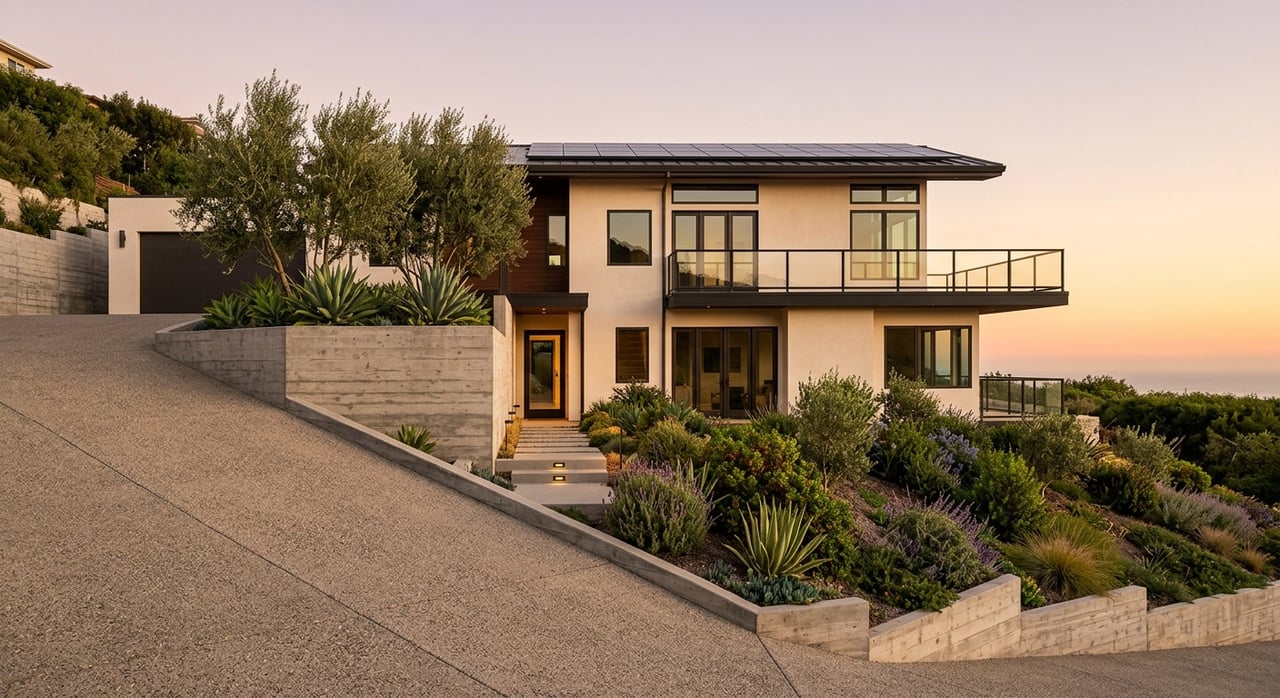
In today’s market, that usually means homes with contemporary comfort layered onto old-world or Mediterranean roots. You may see open-concept living spaces, higher ceilings, large expanses of glass, spa-style baths, guest houses, and resort-style pools. Materials such as stone, plaster, oak, limestone, and iron often help newer homes feel aligned with Rancho Santa Fe’s established aesthetic.
What newer estates offer today
For many buyers, newer estates offer ease and livability. Open kitchen and family spaces, larger primary suites, and stronger indoor-outdoor flow can support the way people live now. If you entertain often or want a home that feels turnkey, a newer or fully reimagined estate may check more boxes.
Outdoor amenities are also a major part of the appeal. Courtyards, loggias, pool areas, and guest accommodations often make the property feel like a private retreat. While the architecture may be fresher and the floor plan more current, the best examples still feel connected to Rancho Santa Fe rather than imported from a completely different market.
Historic vs. newer estates at a glance
If you are comparing both options, a simple side-by-side framework can help.
| Feature | Historic Estates | Newer Estates |
|---|---|---|
| Core identity | Strong link to the 1920s Covenant era | Newer expression within established design controls |
| Typical style cues | Spanish Colonial Revival, adobe, hacienda, traditional ranch language | Modern Mediterranean, transitional, or contemporary California luxury |
| Layout feel | More traditional room sequencing | More open-concept living |
| Visual character | Mature landscape setting and original architectural detail | Updated finishes, larger glazing, and amenity-driven design |
| Buyer priorities | Provenance, character, and sense of place | Comfort, flow, and modern lifestyle features |
Neither path is better across the board. It really comes down to how you want the home to feel day to day, and how much value you place on original character versus newer function.
The broader Rancho Santa Fe estate market
The Rancho Santa Fe story is not limited to the Covenant alone. The County of San Diego identifies later-developed estate subdivisions and specific-plan areas in the broader market, including Rancho Cielo, Rancho La Cima, South Pointe Farms, Rancho Santa Fe Highlands, Rancho Del Rayo, and Whispering Palms, among others. These areas help expand the estate landscape beyond the historic core.
According to the County, many of these perimeter communities have deed restrictions and architectural review committees similar to the Covenant. Home size, lot size, materials, and design quality are often comparable to the central area. For buyers, that means you may find newer estate options in the broader Rancho Santa Fe market while still seeing a strong emphasis on visual consistency and site-sensitive design.
What buyers usually notice first
When you walk a historic estate, you often notice the setting before anything else. Mature trees, long-established gardens, and a home that feels naturally placed on the land can create an immediate emotional pull. The architecture often feels collected over time rather than freshly composed for impact.
When you tour a newer estate, the first impression is often the flow. Large gathering spaces, seamless indoor-outdoor living, and updated finishes can feel lighter and easier for modern routines. The lifestyle is often more resort-oriented, even when the architecture remains restrained.
Because the Covenant area is largely built out and very few unimproved sites remain, buyers are often choosing between carefully preserved older homes and newly built or fully reimagined estates on existing parcels. That dynamic is a big part of what makes Rancho Santa Fe so compelling. You are not usually choosing between old and generic new construction. You are choosing between different interpretations of an established estate tradition.
How to choose the right fit
The best choice usually starts with your lifestyle priorities. If you value original character, architectural heritage, and a stronger sense of history, a historic estate may feel more meaningful from the start. If you want modern flow, updated systems, and amenity-rich living, a newer estate may better match how you use your home.
It also helps to think about your comfort level with renovation or preservation. An older property may offer irreplaceable charm, but some buyers prefer a home that already reflects current finishes and layout expectations. A newer or reimagined estate can offer that convenience while still respecting the broader Rancho Santa Fe character.
In a market this nuanced, the details matter. The lot, the landscape, the review environment, and the way a home fits its setting all shape long-term value and daily experience. That is why local guidance can make such a difference when you are narrowing your options.
If you are weighing historic charm against newer estate living in Rancho Santa Fe, Hatrick Real Estate can help you compare opportunities with clear guidance, modern support, and a smoother path forward.
FAQs
What makes a Rancho Santa Fe estate feel historic?
- A historic Rancho Santa Fe estate usually reflects the 1920s Covenant era, Spanish Colonial Revival influence, adobe or hacienda design roots, and a mature landscape setting.
Can a newer Rancho Santa Fe home still feel authentic?
- Yes. Newer homes can still feel true to Rancho Santa Fe when they follow the area’s restrained, site-sensitive design language instead of leaning into extreme modern styles.
Are there newer estate communities beyond the Covenant in Rancho Santa Fe?
- Yes. The broader Rancho Santa Fe market includes later-developed estate areas such as Rancho Cielo, Rancho La Cima, South Pointe Farms, Rancho Santa Fe Highlands, Rancho Del Rayo, and Whispering Palms.
What do buyers usually prefer in historic Rancho Santa Fe estates?
- Buyers often choose historic estates for original character, traditional room flow, architectural heritage, and a stronger sense of place.
What do buyers usually prefer in newer Rancho Santa Fe estates?
- Buyers often prefer newer estates for open-concept layouts, larger kitchen-family spaces, updated finishes, larger primary suites, and resort-style outdoor living.